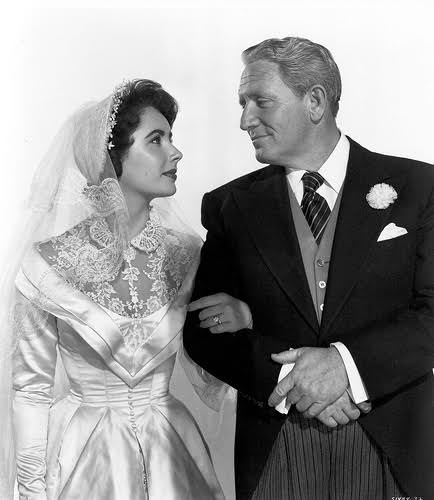
 It's wedding season, and—partly inspired by the TV show Married at First Sight*—I’ve had a genius idea for getting evangelical believers up the aisle in 2016. Arranged marriages. And I'm only slightly joking.** Let me explain why.
Like most young people who have grown up in the church, I've been subjected to plenty of Christian dating advice in my time—books, blogs, awkward youth group talks. Some of it quickly descends into conjecture and legalism, and can be summed up in six desperate words: Please, please just don't have sex.
Other times it’s more constructive, if alarmingly sincere. And that’s exactly why it strikes me that arranged marriages are the natural extension of the conservative evangelical dating narrative. Consider how an arranged marriage—where family makes an initial introduction, but the power of veto held by the couple—fits with these sorts of ideas you might have heard:
The Bible’s case
Almost all the marriages we see in the Bible appear to be arranged—and few matches can be described as romantic. And it’s possible that Paul is talking to Fathers in 1 Corinthians 7 v 38:
“He who gives his virgin in marriage does right…”
In any case, the Bible’s emphasis appears to be on the institution of the family in a wider sense, rather than of marriage between two people. Arranged marriages would at least make sense of another current-but-quirky conservative evangelical narrative which just can’t quite reconcile itself convincingly: Just which men are single women supposed to submit to? No one? Everyone?
My Dad lives 250 miles away, and an occasional 15 minute phone conversation isn’t a substantial basis for living out the inner, beautiful God-ordained biblical femininity that’s supposed to be inside me somewhere. If Pops was choosing my marriage partner at least there’d be an issue to submit on.
If the idea of an arranged marriage rankles it reflects, perhaps, that sense of individualism—and the all-consuming goal of personal happiness and fulfilment—which we have learned from our culture, and which is rather difficult to find in Scripture.
Which leads me to my final point…
Everyone else is doing it.
Here in the UK, it’s commonplace for devoted followers of other major religions to arrange marriages. Our Christian brothers and sisters in other parts of the world do too. "Love matches never work out," my host family in south Asia last summer told me: "Arranged marriages are much better".
In times past, marriages were arranged based on a variety of economic, political and social needs for the family. These factors may be less important now, but in a country where Christians are a religious minority, arranged marriages are an important way of securing the future of a marginalised cultural group. Bible-believing Christians in the UK aren’t a marginalised group quite yet—but we sure are marginal. So much so that the single person at church lamenting the scant number of shiny fish in the pool is something of a cliché.
Pragmatically, perhaps our families do know us—and what we need in a spouse—better than we know ourselves.
Perhaps our families do know us—and what we need in a spouse—better than we know ourselves.
So there you have it: Arranged marriages are the future for evangelical Christians. Does anyone reading have any just cause or impediment why it should not be so? Probably. If so, you should declare it in the comment box. Now.
But in the meantime: Dad, if you're reading this, you know what to do...
* This TV show follows couples selected by a panel of experts who agree to marry on the same day they meet each other. It follows them for a month after the wedding
** Ok, I’m a lot joking.
Now you've read the article, let us know what you think. Comment in the box below. You can also like us on Facebook, follow us on Twitter, and subscribe to our YouTube Channel

Rachel Jones is the author of A Brief Theology of Periods (Yes, Really), Is This It? and several books in the award-winning Five Things to Pray series, and serves as Women's Ministry Lead at King's Church Chessington, in Surrey, UK.