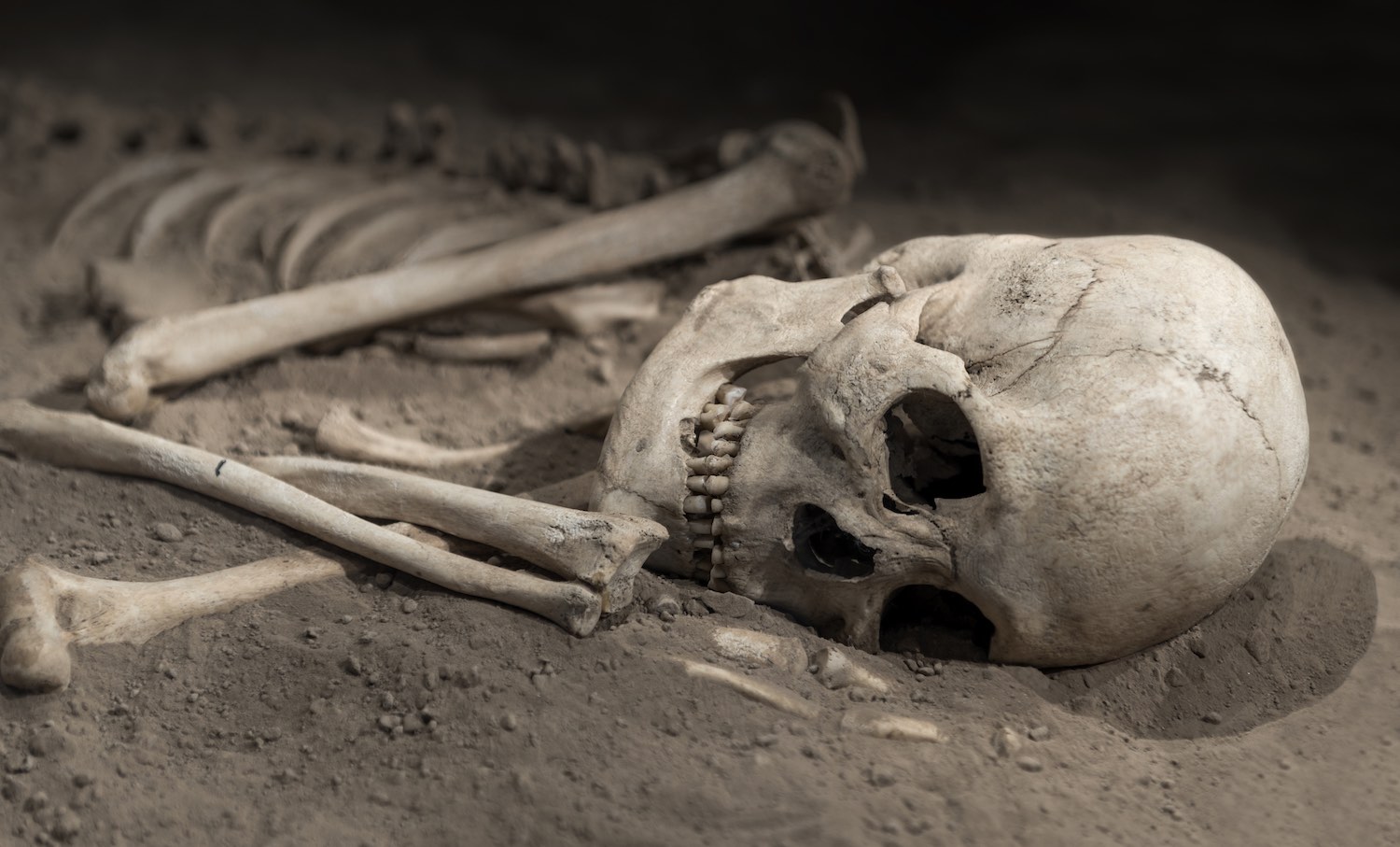
Are people fundamentally good or basically bad?
It’s a question that runs through a huge amount of debate and decision-making in politics, the law, education and daily life.
Whole political philosophies are built on how we view human nature. The 17th century English philosopher Thomas Hobbes is the champion of the “Man is bad” camp. He famously declared the life of uncivilized humanity as…
“Violent, nasty, brutish and short.”
In the opposite corner is 18th century Swiss-French “Enlightenment” philosopher Jean-Jacques Rousseau, who declared that…
“Man is born free but everywhere is in chains.”
Before the development of society and property, Rousseau claimed, we lived as “Noble Savages” in a state of virtue and innocence.
So, which is correct?
Within a few pages of its opening the Bible records the murder of Abel by his brother Cain; the first of many in its blood-soaked pages. The Bible never shies away from revealing the dark side of human nature. The Bible doctrine of original sin would side with Hobbes.
And yet, most people in our culture shrink at the idea of something that seems so… medieval.
New scientific research
Now Spanish scientists have thrown new light on the subject by a mass study of murder in over 1000 non-human species and in different human societies over the millennia. Many species, such as whales and bats, were found never kill their own kind, while others, such as wolves and meerkats, are the animal-world equivalent of serial killers.
Even among the species that do kill their own kind it is often largely the killing of the young that is practised. Among primates about 2% of deaths are by the hand of their own species. The study observed that this 2% rate is equivalent to that found in human hunter-gatherer societies even today. What stands out is that humans are the foremost among those who kill adults of their own kind.
But a profound change in human behaviour came, the researchers discovered, when humankind began to re-organise itself into agrarian communities and as towns and cities developed. The establishment of laws—“Thou shalt not kill” included—became wide spread. Since medieval times the murder rate has fallen across the world from the 2% figure to an average of 1.3%. In some countries, where peace and the rule of law are most embedded, such as Britain today, the murder rate is less than 0.02%. That’s one hundredth of the historical rate.
So the research demonstrates that humanity, when unbridled by the restraints of law and society, is as willing to kill our own as our non-human primate cousins. Hobbes triumphs and the myth of the Noble Savage living in peace and harmony without knowledge of evil, is itself slain.
For Christians, this should of course come as no surprise. In our natural state, there is murder in our hearts. It reminds us to give thanks for God’s “common grace” provision of law and order to restrain evil (Romans 13 v 1-4). And it reminds us to marvel again at God’s “special grace” in saving his people. Yes we have been “born bad”—but that didn’t stop Christ dying for us. “You see, at just the right time, when we were still powerless, Christ died for the ungodly. … God demonstrates his own love for us in this: while we were still sinners, Christ died for us” (Romans 5 v 6, 8).
What do you think? Join the conversation and comment below. You can also like us on Facebook, follow us on Twitter, subscribe to our YouTube Channel, and download The Good Book Company App straight to your phone or tablet.