⚠️ Christmas Closure - Our warehouses will be closed from 24th December until 5th January. Any orders placed during this time will be held and dispatched on 5th January. Thank you for your patience, and merry Christmas!
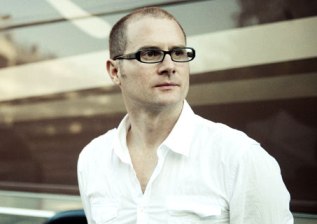
Great interview on Sky Sports this morning with Greg Cushing, who played scrum-half for Cambridge University in this afternoon's rugby league clash with Oxford.
Greg's a committed Christian, and in the report speaks openly and non-cheesily about his faith (interspersed with the obligatory shots of the river in Cambridge and heavy-looking books about Christianity).
It's well worth watching the whole two minutes here, but here's a great quote from Greg, linking his experience of having team-mates in rugby to how he sees and values Jesus:
"You just have to look into their eyes and when they say 'I will lay my body on the line for you', you know they're telling the truth.
"When you look into Jesus' eyes, metaphorically, you see that look, that look of self-sacrifice, that says 'Not only will I lay my body on the line for you, I will pour out my blood for you, I will give my life for you.'"
The only bit he seemed to hesitate on at all was whether he was praying for victory. Which has got me thinking about how Christian elite sportsmen pray: is it right to pray for victory? And how do I (definitely not an elite sportsman!) pray in the equivalent situations in my life. I'm having a think, and I imagine there'll be a blog on it before too long…

Spotted this link on the BBC news website: "Kinky Granny among those who passed". Of course "Kinky Granny" grabs attention - but what caught my eye was "passed".
Passed what? Her driving test? The citizenship exam? Her 100th birthday? No—it was a link to the monthly review of lesser-known people who've recently died.
But I still want to know what "passed" means. Is it short for "passed on" or "passed away"? If so, where to? Some pleasant place where the deceased meet loved ones and look down benevolently on this world, like in the bestseller The Lovely Bones? Or have they "passed" some kind of entrance exam, proving themselves good enough for "heaven"?
Or is it simply that their lives have passed - been used up, finished, no longer existing?
If the BBC mean any of the above, it can only be because they don't believe Jesus' words: "I tell you the truth, whoever hears my word and believes him who sent me has eternal life and will not be condemned; he has crossed over from death to life." John 5 v 24

Today is World Book Day (which is why you might have spotted schoolchildren doing a bad impression of Harry Potter/Spiderman/Bella Swan).
So, to celebrate, we'd love you to tell us in the Comment section below:
Which book has had the most effect on you in the past year?
That's a deliberately vague question, and secular books allowed just as much as Christian ones!

Interesting comment from Kirsty Young, who’s presenting a new BBC series called “The British at work” from 10th March.
In the last 15 years work has, she says, shifted from “being what we do to who we are”.
If that’s the case, then we’d expect work increasingly to be an idol in people’s lives (my career is what gives me worth, gives me what I need, and what comes first when push comes to shove); and we’d need to communicate the good news of the gospel accordingly.
But I wonder if this shift is in fact quite geographically-specific. Our London commuter suburb is full of “live to work” people, by choice or by necessity. But before London, we lived in Hull, which has a (much healthier) “work to live” kind of outlook. Different idols instead, of course, but work for most people is not a huge part of their identity.
But still, it’s worth people like me, and publishers like us, remembering that what holds true inside the M25 often doesn’t outside it!

I worked as a journalist in the Middle East for many years before I started with The Good Book Company, so I have been following the dramatic upheavals in the region with interest. We continue to pray that the slow move from authoritarian regimes to more open and democratic ones would open a door for the gospel in those countries.
One country that has not yet been touched by the troubles is Pakistan, which is far more Islamic by nature than Egypt, Tunisia and Libya. Those who study international affairs in this region predict that any spread of public unrest to Pakistan could have far more bloody outcomes than what has happened so far. Pakistan has a much stronger and more influential radical Islamic population. Parts of it are hotbeds for terrorist training. The minority of Christians in the country are under constant pressure and persecution.
One constant source of fear is the way that Pakistan's blasphemy laws allow many Christians to be falsely accused of "dishonouring Islam" and imprisoned under threat of execution. It is routinely used by radical Muslims to persecute believers.
Which makes it even more tragic that the only Christian in Pakistan's government, Shahbaz Bhatti, the Minister for Minorities Affairs, has been assassinated by gunmen in the street as he left his mother's house for a cabinet meeting.
He was a Catholic in his 40s, and had made it his goal to overcome faith-based divisions. He had already built unprecedented bridges between religious leaders in Pakistan, but had predicted his death in a remarkable interview on the BBC website.
He is not the first to be removed from Government in this way. In January Salman Taseer, the Governmor of Punjab province, was killed by a bodyguard who said he was angry that the politician opposed the blasphemy laws. To the horror of Pakistan's besieged liberals, many ordinary citizens praised the assassin - a sign of the spread of hardline Islamist thought in the country.
Campaigning group Christian Solidarity Worldwides National Director, Stuart Windsor, commented: Shahbaz Bhatti was known personally to me for twelve years, and we worked closely with him on the causes which he passionately espoused. He was a true patriot who loved his country and wanted to see the realisation of Jinnahs vision of a harmonious, pluralist society.
"He never achieved what he dedicated his life to the eventual repeal of Pakistans blasphemy laws. But he tried, bravely, and his life was a blessing to many."

Quick quiz - who is this about - fewer points the further down the list you have to go:
Give up? OK maybe the headline gave it away in connection with the leek and the date. It's St David's day today, so our greetings to all you wonderful people of Wales who may be reading this on St David's day.
As with many "saints" what we know of his life is difficult to weed out from the inflated claims that biographers make about their holiness, miracles and influence. But certainly the deathbed saying: "Do the little things", which has entered Welsh folklore as a popular proverb - 'Do the little things in life' ('Gwnewch y pethau bychain mewn bywyd') - is something we can take to heart.
Do we place too much emphasis on the big things we attempt for God - and neglect the power of the small things? A gentle piece of encouragment, a small act of kindness, a text reminding someone you are praying for them, a Bible verse shared, a smile or a greeting to a stranger or a shop assistant. Life is made up for the most part of these little things. And St Dave reminds us that Christ can inhabit each of them.

The High Court has backed a council's decision to bar a Christian couple from fostering children because, in the words of Eunice Johns, she and her husband Owen: "were not willing … to tell a small child that the practice of homosexuality was a good thing."
Christian Legal Centre: "fostering by Christians is now in doubt."
Stonewall: "If you wish to be involved in the delivery of a public service, you should be prepared to provide it fairly to anyone."
Eunice Johns: "All we wanted was to offer a loving home to a child in need. We are prepared to love and accept any child."
Mr and Mrs Johns have fostered 15 children over the last 20 years. There are well over 15,000 children in care at the moment.
Books have a great, and often deep and lasting, impact on people who read them. Good Christian books excite, encourage and equip Christians, and help to bring the gospel clearly and engagingly to "not-yet-Christians."
But equally, a “Christian” book which contains mistakes (theological, not spelling!) can divert, damage or even destroy Christians, and leave non-Christians not knowing what the Bible actually teaches.
Which is why a new book by a popular author looks like it needs a large health warning attached.
Rob Bell, the American pastor who produced the extremely popular Nooma videos, and who is a great communicator and writer, has a new book out this spring, called “Love wins”. Great title, but judging by the publicity, its central message is that hell is empty, because ultimately God will save everyone, whether or not they’ve accepted Jesus as their Lord and Saviour.
It’s important to say this is only the publicity: some people have helpfully pointed out it could just be a brilliant marketing strategy (if it is, then it seems unfortunate to use heaven, hell and salvation as sales-boosting tools).
The publicity video is here: and after watching it, do go here for some Bible-based, honest answers to the questions Bell asks.
For what it’s worth, I find that a helpful place to focus is Jesus’ first words in Mark’s gospel (1 v 15), a summary of His central message. However popular or plausible Rob Bell is, it’s Jesus’ words which must provide the benchmark for whether or not we welcome Bell’s book.
“The kingdom of God is near”.
What’s remarkable is not that those who choose to live without God while misusing his gifts endure life beyond death without God and without any gifts (hell).
What’s remarkable is that for people like that (us) the kingdom of God is still near, reachable, open. In reality, this is what it means to say that Love wins.
“Repent and believe the good news”. What’s wonderful is that anyone who simply:
has a guaranteed, unlose-able eternal place in it. Anyone can be won over by Love, and ask Love to win kingdom life for them.
But the Bible teaches clearly that no one is forced to ask God’s Son (Love in human form) to be their Lord and Saviour. No one is forced to go to a heaven they don’t believe in, ruled by a God they don’t like, loved by a Love they don’t want. That wouldn’t be very loving.
Wiser bloggers than me have commented on the publicity for this book: if you want to know more, check out Justin Taylor and Kevin DeYoung.

“Empirical evidence indicates that God is good for you.”
Or so the Daily Mail told me on Saturday. Its central thrust: if you believe in God and go to religious meetings, you’re happier, healthier and you live longer.
It seemed like a great argument for God.
But as I read through, something troubled me, and eventually I put my finger on it: it was so man-centred. This wasn’t an argument for God existing, and therefore our need to take Him seriously; this was an argument for believing in God whether or not He’s real, because we need to take our own happiness seriously.
What really matters is whether or not God exists in reality; not whether or not the idea of “god” makes us feel better inside.
Towards the end, the article claims to critique atheist missionaries such as Richard Dawkins as leading people up a “blind alley”, on the basis that religious people live longer and have more children. So they’re wrong.
Richard D is, of course, a pretty clever guy, and would make mincemeat of this (as many of the commenters on the online article have done). Just because being religious makes someone happier, healthier or longer-living, doesn’t make it true.
And actually anyone who thinks it's a good idea to become a Christian thinking that it will give them greater worldly happiness, more bodily health, and a longer life will soon find out that they’ve chosen the wrong product.
After all, the man who most embodied a life lived for God died poor and in lonely agony in middle age. And he also warned: “if anyone would come after me, he must deny himself and take up his cross” (Mark 8 v 34).
Christians—those who know God personally, and seek to live His way—are truly blessed (Psalm 1 v 1). They know their lives have eternal purpose - so can know true satisfaction. They know their lives are eternally saved - so can know real security. They know they will enjoy Christ's riches forever - so can live in contentment now, whatever their circumstances.
But that’s not the same as having health, happiness and long life here and now.
So one final thought: does our evangelism ever sound like this article? Do we ever promise, even if only implicitly, that if someone follows Christ their life will go “better”? Because that’s not how Christ’s evangelism sounded…