Bunting? Check!
Cucumber sandwiches? Check!
Union Jack hat and Umbrella? Check!
Britain is preparing for a big party that will kick off a summer of celebration, starting with the Queen's Diamond Jubilee celebration this coming weekend, and culminating in the Olympics in August. We're all looking forward to having a fantastic Summer of Fun - and the good weather has arrived just in time!
But behind it all the excitement, the niggling worry about how we will afford it all in this time of economic austerity never quite goes away.
Which is a little how the people of God must have felt about the original Jubilee celebrations commanded by God in Leviticus 25.
As part of his instructions to his redeemed people, the Lord ordained that the weekly pattern of 6-days work one-day rest was to be repeated with years. So people were to sow their fields and reap a regular harvest for six years, but the seventh year was also to be a sabbath year. They were to let their fields lie fallow - to plant nothing. They were to live from the things that grew naturally in the fields, and from crops stored from previous harvests.
But in addition to this there was another Mega-sabbath to be kept. After seven of these sabbath years - 49 years - they were to celebrate a special year of Jubilee on the 50th year.
These seven-year farming sabbaths model good land management in ancient cultures. Leaving land fallow allows it to "recover" and remain fruitful over time. When land is overworked it's productive value drops over time.
But it wasn't pragmatics that drove the Sabbath rule - they had a spiritual purpose. It was to teach them that there is more to life than work, work, work. It was to teach them to trust God for provision. It was to reflect the character and nature of God as a worker who rested and rejoiced in his handiwork.
Every time a sabbath year came round, no doubt they would be looking forward to having a "sabbatical". It was a chance to rest and to celebrate. But what would they eat? What would they live off? As well as planning for it with the storage of crops, they would also have to rely on God's provision to see them through the year. In order to be obedient to God's law, they needed to trust that He would supply their needs. They needed to trust in Jehovah Jireh - The Lord our Provider (See Genesis 22 v 14)
But in addition to Rest, Reliance and Rejoicing, the Jubilee was designed to model and show one other really important thing.
Call back into the blog tomorrow to discover what that is...
Have you ever been asked this question? On one level, it’s asking something very simple – have you responded to the Gospel by turning from your sins and putting your trust in Christ?
But as you dig into the way the Bible talks about salvation in general, it becomes less easy to answer. Because in general, the Bible speaks of three tenses to salvation. Past present and future. It is, at one and the same time, a past event, something with is currently going on in me, and something which I am waiting to receive in the New Creation.... continue reading

I'm David. I do Sales, Marketing, PR and Social Media at TGBC and pretty much whatever else I'm asked to do! I also organise the Friday Blog offers so if you have any suggestions please comment below and we'll see what we can do for a one-off offer.
After over 5 years of running the 11-13 year old youth group at church I now help lead a Sunday School for 5 year olds, which is a change of pace. It's a constant reminder to work hard at explaining the gospel to people at different ages and stages. It's such a joy to see gospel truths being grasped.
My main hobby at the moment is golf although I do enjoy a bit of boxing and am contemplating whether I should take up Mixed Martial Arts (don't tell my mum!!). I get bored very easily so I have to keep learning and doing new things.
My favourite passage in the Bible is Psalm 23. 'The Lord is MY Shepherd' has kept me going through many trials in my life.
I am the reigning TGBC fantasy football champion, and also Senior Editor. For someone who is paid to write for a living, I find scribbling these biography things really hard.
Interesting and not-so-interesting things about me:
There's another rainbow I regularly see in the Good Book Company offices. And it's not welcome!
As we are an über-cool organisation, we work on Apple Macs - the Ferraris of the computing world.
Mac users are known for being loyal evangelists of the brand, but at the risk of being branded a hardware heretic by the Mac-zealots , there are times when I could happily throw mine out of the window. There are times when, inexplicably, it just seizes up, and instead of a wristwatch ticking round, or a progress bar creeping across the screen, you get what is colloquially known as "The spinning wheel of death".... continue reading
If you’ve ever found it hard to keep your priorities right or your diary tight... If you’ve ever wondered how to stay engaged and enthusiastic in whatever ministry God has equipped you to serve... then you have experienced a struggle that is common to most of us who are active in the local church. A struggle that, if not addressed carefully and biblically, can drag us down.
At a seminar at the Christian Resources Exhibition last week a group of church administrators and I spent 45 minutes looking at how we could use the principle of purposeful pairs to help us persevere in the face of such difficulties.... continue reading
I looked up the word Career in the dictionary the other day and the definition resonated. It said:
"Career (verb): An uncontrolled headlong rush normally ending in disaster"
I grew up in a "non-believing" home, with some pretty wild older siblings. Dysfunctional doesn't quite describe it. When I first started going to a gospel-teaching church as a teenager, I was drawn to a warm Christian family, and eventually responded to the message that made me a part of it.... continue reading
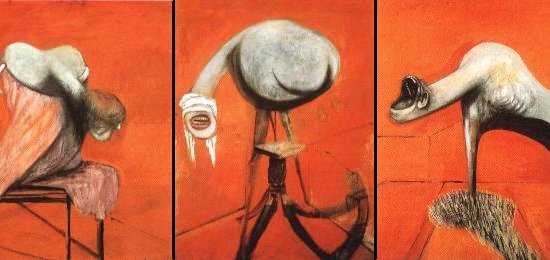
I blogged a few days ago about my visit to the Picasso exhibition that’s running at Tate Britain in London. Each room explored Picasso’s influence on a modern British artist, one of whom is Francis Bacon. I’m not a huge fan of Bacon’s work, so was scanning the paintings quite quickly – until I came across one that literally made me recoil with a shudder. I hated it. It was a triptych – the three paintings displayed side by side – each as horrible as the next.
Intrigued to know why I’d reacted so strongly, I went closer to read the blurb, and discovered that the three images were of people at the foot of the cross. That explained my revulsion. Bacon had cleverly taken the hate, spite, cruelty and self-righteousness of those who had crucified Jesus and were now watching, perhaps even gloating, as He died. “Yes”, I thought, “that’s the sick, evil rejection of God’s King”. And I felt the same revulsion for those wicked people that I had felt for the paintings.
And then I paused. Because it was my sin that held Jesus on the cross, just as much as theirs. The revulsion I felt is a slight glimpse of how we should respond to all sin – not just the obvious, the cruel, the violent – but all my “little” sins as well. The truth is that I have rejected God’s King every bit as much as those jeering onlookers. And it is only through His loving death for me that I now have the privilege of knowing Him as my Lord and Saviour. So now I’m really pleased that I hated Bacon’s work so much. Because through it I have been reminded of the blackness of my own heart, and the wonderful forgiveness made possible, and offered freely, by the one who died and rose again.
It’s a safe bet that at a significant number of evangelical churches last Sunday, the service leader said something like:
“Now Sue’s going to come and read from the Bible, and then our pastor Steve is going to explain the passage to us.”
When I lead, that seems to be my default for explaining what a sermon is: I usually find myself saying that Steve (in our case) is “going to explain the passage to us”.
But I’m not sure that’s a good thing to say—certainly not a good thing to almost always say. A couple of reasons why:... continue reading
There’s a fascinating exhibition running at Tate Britain in London, called Picasso and Modern British Art. It traces the legacy and influence of Picasso on seven British artists including Ben Nicholson, Henry Moore and David Hockney. It’s well worth a visit. One room focuses on a visit Picasso made to London in 1919 to work on the scenery and costumes for Sergei Diaghilev’s ballet The Three-Cornered Hat. It reminded me of watching that same ballet, with Picasso’s scenery and costumes – though not in 1919. It was part of a programme of short ballets where the décor and/or costume designs were by well-known artists. My memory of The Three-Cornered Hat is lots of reeling around by a miller and his wife. But the ballet that really stuck in my mind was very different…... continue reading