
It's sometimes quite weird working in publishing. Just as the temperatures soar, and everyone is walking round in shorts eating ice creams, what are we doing? Writing stuff for Christmas!
Been working with GBCs outstanding childrens' editor Alison Mitchell on a new tract for Christmas for children. I stopped short at the sentence that said:
"A bunch of angels showed up and started singing praises to God"
What exactly is the group noun for angels? Alison originally had "troop" but thought it sounded a bit too militaristic. Not a bad idea, as the host of heaven sometimes acts as an army. But a brief brainstorm in the office came up with some other suggestions:
Any suggestions to help us out are warmly welcome...

Here in the UK, Sunday was census day - filling in the 32-page document cataloguing how our lives have changed since the last one ten years ago. There's been the usual furore about what questions that are and aren't asked. And a campaign by the British Humanist Association to get the non-religious to definitely state that they have no religious affiliation - see here for their reasoning. The government has defended its position on the questions we have been asked – and they’re in charge, so they had the last say.
Skip back 2000 years, to a different government. The rulers of the Roman Empire would have scoffed at the idea that they were being controlled by someone else. It was their idea to take a census - decreed by Caesar Augustus himself (Luke 2 v 1). They were in charge.
Or were they?
But you, Bethlehem Ephrathah, though you are small among the clans of Judah, out of you will come for me one who will be ruler over Israel…
(Micah 5 v 2)
The Lord had decreed that the Messiah would come from Bethlehem - over 700 years previously - and so the mighty Romans meekly did His bidding.

Further thoughts on the Home Group Leader blog

What effect would persecution have on your evangelism?
For the last few days I’ve had the privilege of spending some time with a Christian who lives in one of those countries where Christians are persecuted, and where there is political upheaval and significant unrest. It’s a life so dangerous that very few people know who they are or where they come from.
But what they said is worth being made public.
I asked them how discrimination and the risk of violence affect their mission and ministry. They smiled and said something that will stick with me for years.
“It changes nothing.”
Which is a great challenge to those of us in the West. There is no such thing as being in a situation where it is OK to give up serving. No context is a “get out of mission free” card. If our speaking about Christ produces laughter, derision and scorn; if our living for Christ means we lose out at work, in relationships or with our family; “it changes nothing.”
“For we are God’s workmanship, created in Christ Jesus to do good works, which God prepared in advance for us to do” (Ephesians 2 v 10).
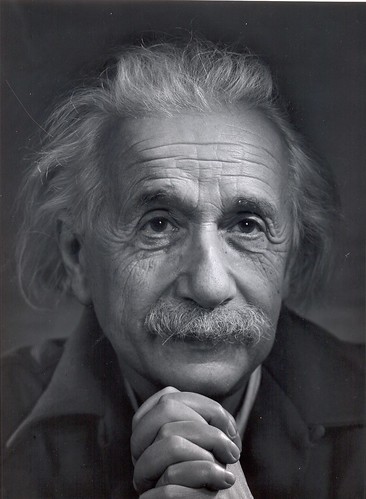
Albert Einstein probably wasn’t thinking about the gospel of Jesus Christ when he said this, but it’s a great reminder for Christians who teach the Bible to adults or children, or who are trying to tell people the gospel message (in other words, all Christians!):
“If you can’t explain it simply, you don’t understand it well enough.”

…happiness, as the Chinese are finding, according to this report in the Guardian.
It’s interesting that this should come at the same time as the Government in this country is beginning tentatively to suggest that happiness is not inextricably linked to economic wealth; that (shock! horror!) you can be rich and sad, and poor and content.
The article on China suggests that the reason is an imbalance in wealth within the country; that although everyone has been getting wealthier, some have been getting much more wealthy than others: “Across China, people have rediscovered the well-rehearsed truth that material satisfaction is relative.”
I wasn’t aware that this was a “well-rehearsed truth”, although coveting something that isn’t yours, instead of enjoying what is, has been a problem since the Garden of Eden. Just ask Zacchaeus whether being the richest guy in town makes you happy.
If only there were a way to escape this view that everything comes down to material wealth. If only there were a “secret of being content in any and every situation … whether living in plenty or in want” (Philippians 4 v 12).
Paul knew the secret. It was to be able to say, and mean, that “for me, to live is Christ and to die is gain” (Philippians 1 v 21).
I’m not good at really meaning that. But I can see that, if I really lived that out, it wouldn’t matter at all to me whether I was “rich”, “poor”, or “poorer than them, but richer than them”.
Wonderfully, the church in China is growing at a stupendous rate, with thousands meeting the Christ who gives contentment each day. Perhaps that huge nation will start getting happier after all…

It’s that time of year. Someone always asks: “What are you giving up for Lent?”
My usual answer is “nothing”. I don’t tend to do that kind of thing. But this year, the question has got me thinking. It has got me wondering whether maybe I’ve given up too much already and that my challenge for the next few weeks is to give up giving up…
So no giving up sweets or ice-cream (which remain very much at the centre of my diet!) But I’m becoming increasingly conscious that I’ve already given up too much of what is really important.
Like the first-century Christians found at Laodicea, it’s so easy to let passion for Christ dwindle and become lukewarm (Revelation 3 v 16). Evangelism in the local community; prayer for non-Christian friends who don’t seem like they’ll ever be interested; reading the Bible simply because we can listen to the inspiring words of our friend and Lord; these are the things which can slowly fade out of life.
Yes, there’s no doubt about it. I’ve been giving up on way too much in recent months.
Here’s what I’m doing this Lent. I’ve texted a friend and asked them to pray that I would “never be lacking in zeal, but keep [my] spiritual fervour, serving the Lord” (Romans 12 v 11). I’m giving up giving up.
If you’d like to join me on my hastily-arranged Lent campaign to give up giving up, text a friend that verse now and ask them to pray; and if you like, share what you’re giving up giving up in a comment below. That way, hundreds of people can pray for you… and you for them.

Do you know what, and how, your child is being taught about sex?
The Christian Institute have released a study on what materials primary schools are using in sex eduction: some of its findings might surprise you. If you're a parent, it's worth reading it and praying about it; if you're not a parent, it's worth telling those you know who are.
This post isn't a covert campaign for home schooling, nor a knee-jerk negative reaction to the whole issue of children being educated about sex outside the home. Some of the best, wisest parents I know take very different approaches in how to bring their children up and how and where to educate them.
But this is the kind of thing that we all too often accept unthinkingly rather than prayerfully, simply because everyone around us does. And "sons [and daughters!] are a heritage from the LORD" (Psalm 127 v 3); a gift from Him for us to have the joy of bringing up and telling about Him.
So though five Christian parents might well come to five different conclusions about primary school sex education, hopefully helpful information like this Christian Institute study will make sure that each of those conclusions are the result of careful thought and great prayer.

We're just in the process of coming up with a title for the newest of our Good Book Guide series on Jonah.
It needs to be short. It needs to be catchy, so people notice and are intrigued. It needs to be easily understandable both in the UK, the US and in Australia.
And I'm a bit stuck.
So, how would you sum up the message of the book of Jonah in a short and catchy sentence? Comments below please!
This is a great spoof video, imagining that a Starbucks branch decided to model itself on a church. It's hilarious, but it's also slightly uncomfortable as it makes us see our church with a newcomer's eyes. I have to admit, there's a chance that I might sometimes sound or act just a little bit like some of these people, without really realising it.
Of course the "tragedy" is that that couple just wanted some coffee. And the coffee branch stopped them getting it, and put them off trying again. If you substitute "to know Christ" for "some coffee", it raises the stakes a bit…