1 Corinthians 16 has, rather unexpectedly, helped me put into words a thought that’s been buzzing round in my head ever since Mark Driscoll wrote his “Blog for the Brits” a few weeks back. Paul’s letter to the Corinthian church has been much in my mind because I’m editing Mark Dever’s second Good Book Guide volume on this book which is out next month—the second early in 2013).
What struck me about chapter 16 is that Paul clearly thinks it would be good for the Corinthian church for a pastor “from the outside” to spend some time with them. He himself can’t come for a while (v 7-9); so he’s sending Timothy, who will “carry on the work of the Lord” (v 10). It seems it was quite common for a Christian leader from a different country to come and spend some time with a church—in Titus 3 v 13 it seems that Apollos—himself from Corinth—has been spending time in Crete.
Which makes good sense. Think of it as church-management-consultancy. When a firm wants to see how they can do better, where they’re being complacent or unprofitable, they don’t get someone who works for them to analyse them; they get someone from the outside. Someone who knows how things are done elsewhere; who can challenge assumptions; who can ask the difficult “Why” questions; who can give the church what Mark Dever calls a “larger vision”.
It’s really helpful to hear what Christians who aren’t from “round here”, but have come to spend some time “over here”, think of our church which exists “right here”.
All of which brings me to something Driscoll said to British evangelicals: “Please ask … why, when there are big events for evangelicals, a speaker often has to be brought in from another country to preach?”.
UK evangelicalism has its weaknesses (as did the Corinthian church, the Cretan church, and as in fact does every church). But perhaps one thing we’ve got right is our willingness to listen to, learn from and be challenged by pastors from other countries.
It’s not that when there’s a big event the organisers have to bring in a foreign speaker (after all, it’s the word of God, not the standard of the speaker, that matters). It’s that they often choose to—because an overseas speaker’s gospel-centred perspectives will be different to ours.
And here’s my provocative thought to finish off with: what proportion of American “big events for evangelicals” invite a headline speaker from overseas? What perspectives and challenges would a UK pastor bring to American assumptions and approaches to ministry? (I can think of a few, but that’s a whole other blog!)
It’s not a sign of something wrong with a church that they do ask outsiders to come and speak to them, critique them, help them. Perhaps it is troubling when a church network doesn’t. Is the issue more with US evangelicalism than British? Comments below!

Sometimes you come across a quote that just needs to be shared:
"A nominal Christian is content with proving the way of salvation by a crucified Redeemer. But the true Christian loves it, delights in it, glories in it, and shudders at the very thought of glorying in anything else ... Let all your joys flow from the contemplation of his cross."
Charles Simeon
It’s not just a job for the professionals. We all have a role to play. There are hurt people in every congregation and we are all called to roll up our sleeves and get involved in spurring them on (Hebrews 10:24).
But pastoral care is not a simple task. It’s hard to speak the truth in love. And, as I was reflecting with a seminar group this weekend, we all too often let our desire to be encouraging overtake our need to be Christ-like and end up saying things that have the potential to be profoundly unhelpful.
What things? Well, the list is large and at first glance fairly innocuous but here are the big 3 phrases that we think should rarely, if ever, pass our lips and the reasons why they really don’t help.... continue reading

I’m used to being the centre of attention on the bus. I guess it’s the huge, metallic silver cello case on my back. Some people stare or laugh. Others ask what it is. And there’s the regular wisecrack: “I bet you wish you’d chosen the piccolo instead”. But yesterday I lost everyone’s attention. Why? Because a man got on carrying a huge, 5ft by 4ft picture of the Michelangelo image of the finger of God. The bus was full of the usual crowd of elderly shoppers, mums with toddlers, and students who’d just woken up. Every one of them riveted by the man and his picture. Clearly a silver cello can’t compete with a piece of the Sistine Chapel! But it did get me pondering…
Up until that moment, I suspect I was the only one on the bus who was thinking about God. But suddenly He was thrust into view – at least for those who recognised the picture. I’d love to tell you I used this the way Paul used the altar to an unknown God (Acts 17v23). “You see this painting of God’s finger? Let me tell you about the whole of God, and how you can know Him.” But I hesitated too long – and the man got off the bus and into the station, presumably to astound a lot of people on a train as well. So I fluffed my chance. But I’m praying that God will use the incident anyway. That someone from that bus will continue to think, or maybe even say “Guess what I saw on the bus” to a Christian with more courage than me. Because, while a giant finger on a bus is pretty memorable, it’s nothing at all alongside the incomparable riches of our Lord God.

As I sat listening to the sermon at church last Sunday morning, I was struck by a big division. Some folk were scribbling earnestly in notebooks as the end of 2 Corinthians was unfolded for us. Others were just sat listening.
I've heard regular encouragements from the pulpit over the years, many suggesting that note-taking is a sign of real "keen-ness" as a Christian. And certainly there are some things to commend it:
The case against
But there is also a strong case against taking notes. Just because you are taking notes doesn't mean you are concentrating. You can be just as distracted from thinking about the meat of the message while scribbling as not.
Our media-driven generation has an uncomfortable disconnect between the way they use information and the age old biblical task of public preaching. Younger people in particular have a different relationship with information because of the way they access it. Lumps of facts and statistics are available at a click. Most of our young know how to get information, but are less sure how it should be processed. Hearing a sermon is not primarily about accumulating information, or about admiring the artfully alliterative point structure.
(Some people at church were even tapping away at their smartphones, raising the deep suspicion that they were not note-taking at all, but texting their friends about where to hook up for lunch, or trying to get to level 129 on Gemquest.)
And the anti-note brigade have some heavyweights on their side: Jonathan Edwards and Martyn Lloyd-Jones to name two.
Edwards said:
“The main benefit that is obtained by preaching is by impression made upon the mind in the time of it, and not by the effect that arises afterwards by a remembrance of what was delivered” (quoted in The Salvation of Souls, eds. Richard Bailey and Gregory Wills, 11).
Lloyd-Jones followed Edwards noting:
“The first and primary object of preaching is not only to give information. It is, as Edwards says, to produce an impression. It is the impression at the time that matters, even more than what you can remember subsequently … It is not primarily to impart information; and while you are writing your notes you may be missing something of the impact of the Spirit.”
And I certainly relate to that. I am not generally a note taker, because I find it easier to think about what is being said without the encumbrance of pen, paper or tablet. Although I have been known to reach for them if something is particularly noteworthy.
Are you a note taker or not? We'd love to hear the reasons why you do or don't.

Classic moment at my class for 3-7 year olds last Sunday. We were explaining about Jesus clearing the Temple, and saying: "this is a house of prayer". My friend Tom, leading , asks a brilliant question: "What is prayer?"
Big smile (minus front teeth) from 7-year old Grace with an eager hand in the air. "It's the quickest way to get a message through to God"
Fabulous answer from left of field, which was meant as simply as it was said. And over coffee in the church lounge afterwards our conversation turned to the alternative. If prayer is the quickest way, what are some of the "less quick" ways we try. I could think of at least three:
Thanks Grace for a brilliant answer, and a timely reminder that I should always take the quickest route when I need to get a message through to God.

If you're anything like me you'll be spending at least part of your weekend taking in the sights and sounds of the various social-networking sites. Between Facebook, Twitter, Google-plus and the blogs, there will be moments that amuse, a few that inspire, the odd one that makes us think... and the inevitable gaggle that shock, dismay, offend or simply make us shiver at their inappropriateness.
Words are powerful - they can build up others (Ephesians 4: 29) or they can wreak great evil (James 3:5-6). And, as such, should never be typed lightly. But how often do we, as Christians, sit and think about the effect our posts and status updates have on those around us?
Earlier this week, local pastor, Gavin McGrath wrote an interesting article calling for a return to modesty on social networking sites.
Earlier this month another minister, Mark Meynell helpfully suggested that before we post our thoughts on the internet we need:
They're principles worth pondering as we engage in the very public world of cyberspace.
Or maybe next time we log on, we should simply discipline ourselves to read a spot of Colossians 3 before we begin to type:
Therefore, as God’s chosen people, holy and dearly loved, clothe yourselves with compassion, kindness, humility, gentleness and patience. Bear with each other and forgive one another if any of you has a grievance against someone. Forgive as the Lord forgave you. And over all these virtues put on love, which binds them all together in perfect unity.

The Command of 1 Peter 3 v 15-16 seems reasonable enough:
always be prepared to make a defense to anyone who asks you for a reason for the hope that is in you…
But the reality, at least for me is always a little more flustered. My problem is that often I have too many answers - attacking the question from different sides! Where do I start?
That's where Chris Sinkinson's latest book is a real God-send (via IVP!). Confident Christianity is a breezy survey of the many faces of apologetics that makes real sense of all the competing approaches that we are offered. The concise chapters look at and compares the various merits of different approaches to how we answer questions, and applies them to some key questions that are raised.
I loved the helpful chapters overviewing Philosophy, Archaeology and "presuppositional apologetics". It put together for me (for the first time), the different ways these arguments can be helpful, and, crucially, when they are best deployed. The tone throughout is not judgmental over any particular approach, but seeks to ark the thinking Christian with a better understanding of how arguments work, and how to use them to lead people to Christ. It is robust and scholarly, but very accessible and applied.
And Chris understands the limits of apologetics. Because no-one can ever be argued into the Kingdom of God. But careful and caring answers are of real value in removing roadblocks to faith, in our own lives as well as in others. A right rivetting read. Check back later for a great deal ...
I heard this at a prayer meeting recently:
“There is no such thing as a great man or woman of God. There is only a man or woman – and a great God.”
Do you agree?
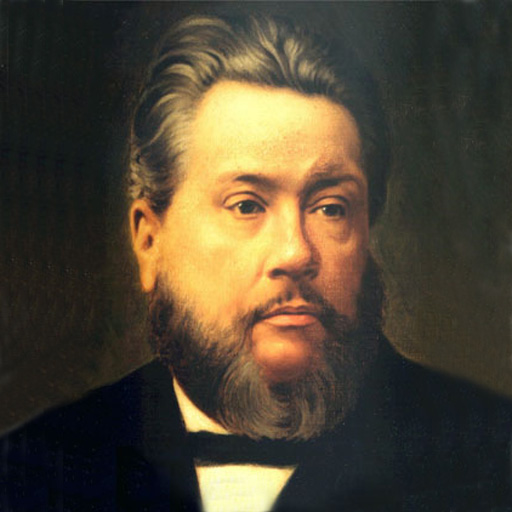
I guess many of us would think of C.H. Spurgeon as a great man of God. But I don’t think he’d agree. Here’s a fantastic Spurgeon quote I was sent last week. He puts the emphasis and glory exactly where it ought to be.
“Consider what you owe to his power; how he has raised you from your death in sin; how he has preserved your spiritual life; how he has kept you from falling; and how, though a thousand enemies have beset your path, you have been able to hold on your way. Consider what you owe to his immutability. Though you have changed a thousand times, he has not changed once.”

I've been enjoying more than my fair share of 50th birthday parties, and a common theme of discussion is the desire to just "slow down a little." It's notable that I need just a bit more sleep, and that I can't pull the long hours that I used to do even in my late 40s. I'm tempted to think that I deserve an easier life now, "because I've earned it."
John Wesley felt the same, but I was shamed to see at what age!
Just reading the list exhausts me! Of course, such frenetic activity can be motivated by fear, but in this case, Wesley was motivated by God's grace to him, and the understanding that every waking moment must be spent in the saviour's service. Of course we need to be sensible with rest, and make sure we are "working for the Lord" for the right reasons, but this remarkable example encourages me to seek productive activity for the sake of Christ, not self indulgent sloth, because he's earned my rest, not me.